Legal AI / Trial preparation / Product concept
TrialSage
Created by Vanya Sahi. What if AI could help you prepare for the courtroom before you ever step into it?

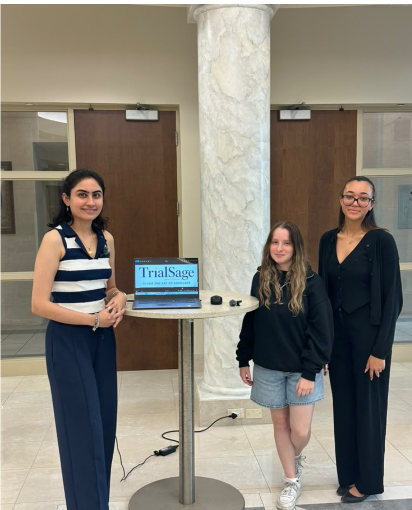
Created by Vanya Sahi
TrialSage
Product case study.
TRIALSAGE
An AI Assisted Trial Preparation and Research Support System for Legal Professionals
Product Case Study
SECTION 1. OVERVIEW
TrialSage is a product concept exploring how artificial intelligence can support trial attorneys and litigation teams during trial preparation, without replacing professional legal judgment. It focuses on trial research, case analysis, jury related preparation, and trial strategy development for trial attorneys and litigation support teams. It is not a clinical research tool.
This case study documents the thinking behind TrialSage: how the problem was framed, how users were understood, how the prototype was tested and iterated on, how capabilities were prioritized, and how the product could move responsibly from prototype to production. The emphasis throughout is on reasoning, not just features.
SECTION 2. INTERACTIVE PROTOTYPE
A working prototype is available at the address below: https://putt-ribbon-26476908.figma.site
The prototype demonstrates the intended flow between organizing case information, requesting AI assisted analysis, reviewing structured recommendations, exploring jury related preparation such as voir dire questions and generic jury psychology profiles, and generating a trial strategy report. It is a product exploration and interaction model, not a production system. It does not implement the access controls, encryption, or audit logging that a real deployment would require, and those requirements are described later as necessary, not optional, next steps.
SECTION 3. VISION AND PROBLEM
Vision. A future in which trial attorneys can securely use an intelligent assistant to organize complex case information, conduct research, explore preparation scenarios, analyze jury related considerations, and generate structured strategy reports, all without compromising confidentiality. TrialSage is designed to augment legal professionals, not replace them.
Problem. Trial preparation can involve large volumes of case materials: pleadings, discovery, depositions, expert reports, exhibits, prior research, and evolving strategic thinking. The starting hypothesis for this project was that attorneys and their teams spend significant effort organizing this material, synthesizing findings, and converting research into actionable preparation, often under time pressure. This is treated as a hypothesis to validate, not a universal fact, since workflows vary by practice area, firm size, and personal style.
Why it matters. If validated, this problem is worth solving because of the time attorneys spend on research and synthesis, the volume and complexity of case materials, the difficulty of converting information into action, and the high sensitivity of the underlying information. Any solution must reduce that burden while preserving human judgment, since legal work carries ethical and professional obligations that cannot be delegated to a model.
SECTION 4. USERS
TrialSage serves a mix of primary users, secondary users, and organizational stakeholders, and not all of them carry equal weight in early product decisions.
Primary: Trial attorneys and litigation associates, who own the core research, analysis, and strategy workflow this product is built around.
Secondary: Paralegals and litigation support professionals, who manage documents and exhibits and stand to benefit from future organization capabilities.
Stakeholders: Law firm partners, who oversee preparation quality and adoption decisions, and firm technology and security teams, who evaluate any new tool against strict confidentiality obligations and can hold effective veto power over adoption regardless of attorney enthusiasm.
Persona: Senior Trial Attorney
A partner level attorney managing multiple active matters. Goal is a well supported trial strategy without spending excessive personal time on document review. Current workflow leans on associate research supplemented by personal review, often compressed close to trial. The core concern about AI is that recommendations could be wrong or overconfident, and that junior staff might rely on them without enough scrutiny. Any tool must meet the same confidentiality bar as internal firm systems.
Persona: Litigation Associate
A mid level associate producing research and drafts in support of trial preparation, under pressure to be both fast and thorough across multiple matters. Wants AI assistance that produces a strong first draft to refine, not a finished product to use unreviewed, and is wary of being seen as less rigorous if AI assistance is not clearly disclosed.
Persona: Firm Technology and Security Lead
Responsible for approving any technology that touches client information. Cares less about how impressive the AI is and more about whether data handling, access control, and governance meet the firm's obligations. This persona's approval is treated as a gating requirement for real deployment, not a formality.
SECTION 5. KEY USER JOURNEYS
Case Analysis. Trigger: attorney wants a structured view of case strengths, weaknesses, and open questions. Current behavior is manual review and note taking. TrialSage intervention is structured, source linked analysis. The human decision point is validating that analysis against professional judgment; the risk is that automated analysis could miss context only a human familiar with the case would catch.
Voir Dire Generation. Trigger: jury selection approaching. Current behavior is drafting from experience and templates under time pressure. TrialSage intervention is a case specific draft grounded in submitted materials. The human decision point is whether questions are appropriate, ethical, and jurisdictionally sound; the risk is generic or inappropriate questions reaching use without review.
Reviewing Generic Jury Psychology Profiles. Trigger: attorney wants general context on jury psychology relevant to the case type. TrialSage intervention is explicitly generic, non individualized profiles meant to support strategic thinking, not predictive claims about actual jurors. The central risk here is overinterpretation, so framing is treated as part of the feature itself.
Reviewing and Validating AI Recommendations. This journey exists across every other one. The user goal is deciding whether a recommendation is trustworthy enough to use professionally. TrialSage's job is to make the basis for a recommendation visible so review is easy, rather than optional friction that gets skipped under deadline pressure.
SECTION 6. PRODUCT PRINCIPLES
Security before convenience. No feature is worth a confidentiality risk.
Human judgment before automation. Automation handles synthesis and drafting; people handle conclusions and decisions.
Traceability before unsupported recommendations. Every recommendation should be checkable against its source.
Domain relevance before generic AI behavior. Legal workflows have specific structure that generic AI patterns tend to ignore.
Transparency before false certainty. Especially for jury related content, outputs are framed as support for thinking, not predictions.
Trust as a requirement, not a byproduct. Trust had to be designed for directly, through traceability and honest framing, rather than assumed.
SECTION 7. PRODUCT REQUIREMENTS SUMMARY
Objective. Help trial attorneys and litigation teams prepare for trial more efficiently through AI assisted research synthesis, case analysis, and preparation support, while preserving professional judgment and confidentiality.
Non goals. TrialSage does not give legal advice, does not predict individual juror behavior with certainty, does not replace attorney or paralegal judgment, and is not built for clinical research contexts.
Core functional requirements. Structured case analysis grounded in submitted materials, voir dire generation, narrowly scoped jury related preparation support, trial strategy report generation, and visible traceability behind every AI generated recommendation.
Core non functional requirements. Confidentiality protections appropriate for privileged material as the eventual target, even though the current prototype does not yet implement them; outputs designed to support critical review rather than blind acceptance; usability under real trial preparation time pressure.
Representative user story. As a trial attorney, I want a structured analysis of my case materials so I can quickly identify key issues, with the analysis traceable back to source material so I can verify it before relying on it.
SECTION 8. CORE CAPABILITIES
Case Analysis. Turns raw case materials into a structured summary of facts, issues, and open questions. This is the foundation other capabilities build on, so its reliability and traceability were treated as non negotiable from the start.
Voir Dire Generation. Produces a case specific draft of voir dire questions to shorten the path from blank page to usable draft, always intended for attorney review and refinement before use.
Jury Analysis and Generic Jury Psychology Profiles. Structured, clearly bounded, non individualized support for thinking through jury dynamics. This is the capability with the highest risk of misuse if not carefully scoped, so it is deliberately limited rather than expanded for impressiveness.
Trial Strategy Reports. A structured report synthesizing the above into a shareable artifact for internal alignment with senior attorneys or firm leadership.
Source Traceability and Feedback. The connective layer that makes every other capability usable in a professional legal context: visibility into what a recommendation is based on, plus a way for users to flag issues.
Future Capabilities. Secure document analysis, evidence organization, and case knowledge management are valuable directions but were explicitly excluded from early scope pending the security investment they require.
SECTION 9. RESEARCH AND VALIDATION
Rather than designing in isolation, this project used prototype level A B experimentation and user interviews before considering any larger production build.
A B experimentation compared different prototype variations to test which workflow structure best communicated product value, which information architecture got users to a useful output faster, which presentation of recommendations created the most clarity, and which experience most encouraged users to review rather than blindly accept AI output.
User interviews went beyond behavior to understand reasoning: whether users understood a recommendation, whether it felt relevant to their case, what would make them trust or reject it, where they expected human judgment to remain firmly in control, and what confidentiality concerns they carried into the interaction.
This document intentionally does not report specific quantitative results, participant counts, or quotes, since none were captured as validated findings at this stage. The value of describing this process is methodological: in a domain like this, behavioral data alone will not explain why trust breaks down, and interviews alone will not show how people actually behave with a real workflow. Using both together, before committing to a production build, was a deliberate way to reduce the risk of building confidently in the wrong direction.
SECTION 10. PRIORITIZATION
Capabilities were evaluated using a RICE style framework adapted with an added Trust and Risk dimension, since a simple value versus effort view understates how much design and governance work is needed for high risk capabilities in this domain.
Case analysis, voir dire generation, and trial strategy reports scored high on reach, impact, and confidence, with manageable trust and risk given attorney review, and were prioritized into the MVP. Source traceability scored as a foundational requirement rather than a competing feature, since it directly reduces risk everywhere else in the product. Jury analysis and jury psychology profiles scored well on potential impact but carried high trust and risk given the potential for overinterpretation, so they were scoped narrowly rather than expanded. Secure document processing and enterprise security controls scored as high value but high effort and high risk, and were sequenced later, once the core workflow had been validated and the necessary security expertise could be brought in.
SECTION 11. MVP
The MVP validates one hypothesis: that AI assisted synthesis and structured, traceable recommendations can meaningfully support trial preparation without compromising judgment or confidentiality.
Included: structured case analysis, AI assisted synthesis with source traceability, voir dire generation, a narrowly scoped and clearly disclosed jury related preparation feature, and trial strategy report generation.
Deliberately excluded: full scale secure document analysis and evidence organization, expanded individualized jury analysis, enterprise administration and firm level access control, and deep case knowledge management across a firm's full portfolio. These are treated as later phase investments once the core workflow and trust model are validated.
SECTION 12. KEY TRADEOFFS
Automation versus human oversight. Automation is used for synthesis and drafting; acceptance and final judgment stay explicitly human, preserving legal accountability.
Convenience versus confidentiality. Confidentiality wins even at the cost of a smoother onboarding experience, because trust with sensitive information is the product's core value proposition.
External AI services versus controlled infrastructure. External services are appropriate for prototype stage exploration, but production is expected to require a controlled, purpose built architecture built with security experts.
Feature breadth versus a focused MVP. A smaller, deeper MVP was chosen over a longer list of shallow capabilities, to prioritize genuine learning over an impressive demo.
Jury analysis usefulness versus risk of overinterpretation. Scope was deliberately narrowed and clearly framed as generic and non predictive, rather than expanded for strategic impressiveness, given the ethical stakes involved.
SECTION 13. SECURITY AND PRODUCTION STRATEGY
Legal professionals handle privileged communications, confidential client information, case strategy, and personal data that could cause serious harm if disclosed. Confidentiality is treated here as a core product requirement, not a technical afterthought.
A production version of TrialSage would need a highly controlled environment addressing access controls and role based permissions, data isolation between firms and matters, encryption at rest and in transit, secure document processing, audit logging, data retention and deletion policies, model governance, vendor risk management, and administrative controls, all developed with qualified legal counsel, privacy experts, and security professionals.
This document does not claim that an in house or controlled deployment automatically guarantees attorney client privilege, legal compliance, or security. Those outcomes depend on architecture decisions made in collaboration with the right experts, not on the deployment model alone.
At a product level, a production system would include a workflow oriented interface, strong authentication and role based authorization, an isolated secure workspace per case, controlled document ingestion and processing, a governed AI model layer with source attribution, an evaluation framework informed by the research practices in Section 9, comprehensive audit logging, and firm level administrative controls. Each component maps to a specific outcome: access controls and isolation enable trustworthy adoption by security conscious firms; source attribution and evaluation enable genuine user trust; audit logging and administration enable the oversight legal organizations require before adopting new technology.
SECTION 14. SUCCESS METRICS
These are proposed targets for future validation, not current results. User metrics would track time spent on preparation tasks and repeat usage across cases. Product metrics would track completion rates across the core journeys in Section 5. Trust metrics would track how often users engage with supporting source information rather than accepting outputs at face value, plus correction and rejection rates on AI generated drafts. Security metrics would track access control effectiveness and the absence of incidents.
SECTION 15. RISKS AND MITIGATIONS
Incorrect or hallucinated AI recommendations: mitigated through source traceability and mandatory human review before professional use.
Overreliance on AI under time pressure: mitigated by workflow design that actively encourages verification rather than treating it as optional friction.
Confidentiality breaches or unauthorized access: mitigated through the security and production strategy in Section 13, developed with qualified experts before any real deployment.
Overinterpretation or misuse of jury related content: mitigated by narrow scoping and explicit, honest framing as generic and non predictive.
User distrust or, conversely, overtrust: mitigated by transparency, traceability, and continued interview based research into how users actually reason about AI output.
Vendor and model dependency: mitigated through model governance and a long term strategy favoring controlled infrastructure for production.
SECTION 16. ROADMAP
Phase 1: validate the core trial preparation workflow through continued prototype testing and interviews.
Phase 2: deepen case analysis and research support based on Phase 1 findings.
Phase 3: expand jury preparation capabilities only as far as validation and expert input support.
Phase 4: build enterprise security, administration, and integration capabilities as a prerequisite for real firm level deployment.
Phase 5: expand into deeper legal workflow support, including secure document analysis, once the Phase 4 security foundation is in place. This sequencing is directional and expected to shift based on research and business considerations.
SECTION 17. WHAT I WOULD VALIDATE NEXT
The highest risk assumptions are not about whether the AI can generate reasonable looking output. They are about whether attorneys, under real time pressure, would trust and use this with real case information, and whether a security architecture can actually satisfy legal confidentiality requirements in practice.
Next priorities: structured interviews focused specifically on trial attorneys, usability studies conducted under realistic time pressure rather than relaxed test conditions, further experiments on how recommendation traceability is presented, early conversations with security and privacy professionals well before committing to a specific architecture, and early input from a legal ethics perspective on the jury psychology capability given its sensitivity. Engineering investment in production security infrastructure is expensive to change later, so the priority is learning as much as possible before that investment is made.
SECTION 18. PRODUCT MANAGEMENT REFLECTION
Working on TrialSage confirmed something I already suspected: in a domain like trial preparation, the hardest product problem is not generating a plausible looking AI output. It is deciding what the product should refuse to claim, what it should require a human to confirm, and what it should not attempt at all until trust and security foundations are in place.
The early work here was about resisting the urge to build broadly. It would have been easy to list many AI powered legal capabilities. The harder work was narrowing that list to a coherent core workflow and being honest about which capabilities, like jury analysis, needed to stay deliberately constrained rather than maximized for impressiveness.
Using A B experimentation and interviews at the prototype stage, instead of moving straight into a production build, reflected a specific belief about how AI products in sensitive domains should be developed: behavioral data alone would not explain why trust breaks down, and interviews alone would not show how people actually behave inside a real workflow. Using both together reduced the risk of building confidently in the wrong direction.
Security was not layered on afterward. It shaped the problem statement, the prioritization framework, and the roadmap from the start, and writing this case study meant being explicit about what would require experts beyond a product concept, including legal counsel, privacy professionals, and security engineers.
If I take one thing from this project, it is that Product Management in a high stakes domain is largely about sequencing trust before scale: validate the workflow and the trust model first, build the security foundation before expanding into higher risk territory, and treat what remains unknown as something to investigate rather than something to assume away.
Interviews & Product Walkthrough
See the product
in conversation.
TrialSage Product Walkthrough
Exploratory Participant Interviews
Product Conversation